
What Perception Feels Like Under Pressure
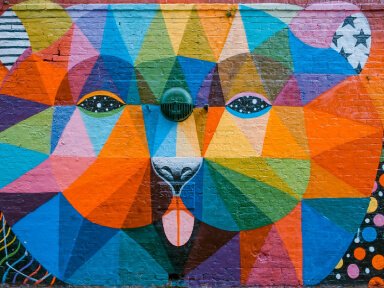
Perception is often described as neutral, passive, or stable. In reality, it rarely is. Under pressure—emotional, temporal, or sensory—perception becomes unstable, accelerated, and fragmented. It stops organizing the world neatly and begins reacting instead. This is the condition my paintings operate within.
In the studio, pressure is not a metaphor; it is a working state. It emerges through speed, repetition, interruption, and density. Marks accumulate faster than they can be processed. Lines cross, reroute, and overwrite one another. Color interrupts itself before it settles. What forms is not an image, but a field where perception is forced to remain active, alert, and unresolved.
Under pressure, perception does not move linearly. It scans, doubles back, hesitates, and overloads. This behavior shapes how my paintings are constructed. There is no compositional hierarchy, no privileged center where meaning stabilizes. Instead, the surface functions as a continuous system, requiring the viewer’s attention to circulate rather than rest. The eye is kept in motion, mirroring the way perception behaves when it cannot rely on clarity or resolution.
These paintings are not meant to be read quickly. They resist immediate comprehension because pressure disrupts interpretation. Before thought arrives, the body registers density, velocity, and tension. Vision becomes physical. The painting is felt before it is understood. This sequence is intentional. It reflects a belief that perception, when strained, reveals more about our internal states than about external images.
Pressure also alters decision-making. In my process, moments that appear resolved are often the most unstable. Resolution reduces tension; pressure demands its maintenance. Areas that feel complete are tested, disrupted, or overwritten. What remains visible is not refinement, but evidence of sustained engagement—a surface shaped by insistence rather than control.
To work under pressure is not to abandon structure, but to redefine it. Structure emerges through repetition, accumulation, and resistance, not through design. Each painting becomes a record of perception navigating instability, holding itself together without relying on clarity.
Ultimately, these works are not about abstraction as a style, but about abstraction as a condition. They ask what it means to see when perception is overloaded, when balance is denied, and when attention is continuously redirected. What remains is not an image to decode, but an experience to inhabit—one that reflects how perception behaves when it is pushed beyond comfort and into sustained intensity.