
Painting as a Feedback System
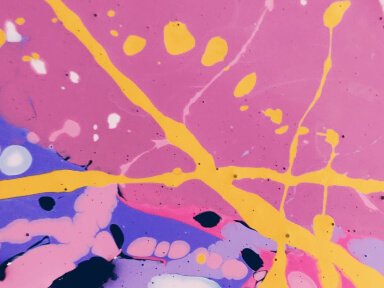
Painting is often imagined as a sequence of intentional acts: a decision is made, a mark is applied, and the painting advances toward completion. My experience of painting is different. Each action generates information, and that information demands a response. The work evolves less as a plan and more as a feedback system.
In this system, no mark exists in isolation. Every line alters the conditions of the surface—its rhythm, density, and pressure. That alteration becomes the basis for the next decision. Painting is not a matter of expressing an idea, but of staying responsive to what the surface produces in return. The process is circular rather than linear.
Feedback introduces instability. A gesture rarely confirms what came before it; more often, it complicates it. Lines reroute, collide, or overload one another. Color interrupts rhythm instead of reinforcing it. These disruptions are not errors to be corrected, but signals—indications that the system is active and resisting predictability.
Working this way requires a particular form of attention. The painter must remain alert to subtle shifts in intensity, not just visual outcomes. When a passage becomes too legible, the feedback weakens. The system flattens. Intervention is necessary—not to fix, but to reintroduce pressure. Scraping, overwriting, or accelerating gesture restores instability and keeps the surface responsive.
This feedback structure extends to the viewer’s experience. Without a hierarchical composition or resolved image, perception must continuously adjust. The eye follows lines that do not settle, navigates densities that refuse clarity, and responds to interruptions that prevent visual rest. Looking becomes participatory. The painting does not deliver meaning; it generates ongoing perceptual activity.
Importantly, a feedback system does not aim for equilibrium. Balance would signal completion, and completion would end responsiveness. Instead, the painting sustains a state of tension—where each element remains contingent on the others. The work concludes not when harmony is achieved, but when the system can no longer produce new information without repeating itself.
Painting, understood this way, is not an object but an event. It is a record of sustained responsiveness under pressure, where perception, gesture, and material remain locked in exchange. What persists on the surface is not an image to interpret, but evidence of a system kept alive through attention, resistance, and continual feedback.