
Why I Resist Resolution in Painting
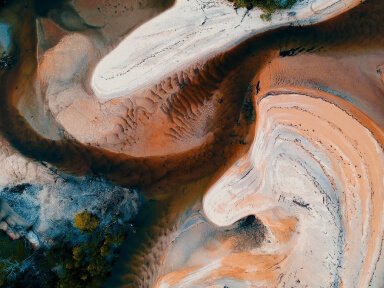
Resolution is often treated as a virtue in painting. It suggests clarity, control, and completion. But resolution also closes things down. It stabilizes perception, quiets tension, and signals that attention can stop. In my practice, this moment is not an endpoint—it is a warning.
When a painting begins to feel resolved, its pressure drops. The surface becomes readable, predictable, and visually compliant. Perception relaxes. For me, this is where the work loses its intensity. I resist resolution not to avoid decision-making, but to keep the painting active—to sustain the conditions under which perception remains engaged.
In the studio, resolution often appears disguised as success. A passage “works,” a rhythm settles, a balance emerges. These moments are seductive. They promise completion. But they also reduce friction. Rather than confirming them, I test them—by interrupting, overwriting, or destabilizing the area. This is not an act of destruction, but of verification. If the painting can survive disruption, it earns its place.
Resisting resolution means allowing multiple states to coexist. Earlier decisions are not erased cleanly; they remain partially visible, compressed into the surface. Time accumulates rather than disappears. The painting becomes an archive of pressure—of shifts, hesitations, and insistence—rather than a single, coherent statement.
This resistance also reshapes how the work is experienced. Without a resolved structure or focal point, the viewer cannot settle into passive looking. Attention moves continuously, scanning and recalibrating. Meaning does not arrive all at once; it remains provisional. The painting does not offer an answer, only a sustained encounter.
Importantly, unresolved does not mean uncontrolled. Each decision is deliberate, even when it appears unstable. The absence of closure is not a lack of discipline, but a form of it. It requires sustained attention, repeated testing, and the willingness to remain inside uncertainty rather than resolve it prematurely.
To resist resolution is to accept that painting is not about arriving, but about maintaining pressure. The work ends not when it feels complete, but when further intervention would only repeat what is already present. What remains is a surface that holds tension without explanation—a painting that stays open, unstable, and insistently alive.